November 18, 2009
Hypromellose
Hypromellose (INN), short for hydroxypropyl methylcellulose (HPMC), is a semisynthetic, inert, viscoelastic polymer used as an ophthalmic lubricant, as well as an excipient and controlled-delivery component in oral medicaments, found in a variety of commercial products[1][2].
As a food additive, hypromellose is an emulsifier, thickening and suspending agent, and an alternative to animal gelatin.[3] Its Codex Alimentarius code (E number) is E464.
Chemistry
Hypromellose is a solid, and is a slightly off-white to beige powder in appearance and may be formed into granules. The compound forms colloids when dissolved in water. Although non-toxic, it is combustible and can react vigorously with oxidising agents.[4]
Hypromellose in an aqueous solution, unlike methylcellulose, it does not exhibit thermal gelation property. That is, when the solution heats up to a critical temperature, the solution congeals into a non-flowable but semi-flexible mass. Typically, this critical (congealing) temperature is inversely related to both the solution concentration of HPMC and the concentration of the methoxy group within the HPMC molecule (which in turn depends on both the degree of substitution of the methoxy group and the molar substitution. That is, the higher is the concentration of the methoxy group, the lower is the critical temperature. The inflexibility/viscosity of the resulting mass, however, is directly related to the concentration of the methoxy group (the higher is the concentration, the more viscous or less flexible is the resulting mass).
Uses
There are many fields of application for hypromellose. These are not limited to the following:[5]
- Tile Adhesives
- Cement renders
- Gypsum products
- Pharmaceutical
- Paints & Coatings
- Food
- Cosmetics
- Detergents & cleaners
Use in construction materials
HPMC, sometimes known as Hypromellose, is used in a primarily in construction materials like tile adhesives and renders [6] where it is used as a rheology modifier and water retention agent.
Functionally HPMC is very similar to HEMC (hydroxy ethyl methyl cellulose) Trade names include Methocel and Walocel. The global leading producer is Dow Wolff Cellulosics GmbH [7].
Ophthalmic applications
Hypromellose solutions were patented as a semisynthetic substitute for tear-film.[8] Its molecular structure is predicated upon a base celluloid compound that is highly water soluble. Post-application, celluloid attributes of good water solubility reportedly aids in visual clarity. When applied, a hypromellose solution acts to swell and absorb water, thereby expanding the thickness of the tear-film. Hypromellose augmentation therefore results in extended lubricant time presence on the cornea, which theoretically results in decreased eye irritation, especially in dry climates, home, or work environments.[9] On a molecular level, this polymer contains beta-linked D-glucose units that remain metabolically intact for days to weeks. On a manufacturing note, since hypromellose is a vegetarian substitute for gelatin, it is slightly more expensive to produce due to semisynthetic manufacturing processes. Aside from its widespread commercial and retail availability over the counter in a variety of products, Hypromellose 2% solution has been documented to be used during surgery to aid in corneal protection and during orbital surgery.
Excipient/tableting ingredient
In addition to its use in ophthalmic liquids, hypromellose has been used as an excipient in oral tablet and capsule formulations, where, depending on the grade, it functions as controlled release agent to delay the release of a medicinal compound into the digestive tract.[10] It is also used as a binder[11] and as a component of tablet coatings.[12] [13]
Test Methods
Various benchmark tests are used to qualify hypromellose:
- Viscosity
- Degree of substitution (DS)
- Molar substitution (MS)
- Salt content
- Moisture
Viscosity test methods
Because hypromellose solution is a non-newtonian solution and exhibits pseudoplastic, more specifically, thixotropic behavior, various test methods are available, and the results of different methods and viscosmeters do not necessarily correspond to each other. Also, due to viscometer acceptable ranges of error, viscosity is typically given as a mean, or as a range. Typical viscosity test will specify the following:
- Solution concentration (1%, 2%, 1.9% bone dry, etc.)
- Viscometer (Brookfield LV or RV, Höppler falling ball, Haake Rotovisco, etc.)
- Viscometer spindle number (1 ~ 4 for Brookfield LV, 1 ~ 7 for Brookfield RV, etc.)
- Solution Temperature (20 °C, 25 °C, etc.)
Degree of substitution
Degree of substitution is the average level of methoxy substitution on the cellulose chain. Since there are maximum three possible sites of substitution with each cellulose molecule, this average value is a real number between 0 and 3. However, degree of substitution is often expressed in percentages.
Molar substitution
Molar substitution is the average level of hydroxypropoxy substitution on the cellulose chain. Since hydroxypropoxy base can be attached to each other on side chains and does not each require a base substitution site on the cellulose molecule, this number can be higher than 3. However, molar substitution is also often expressed in percentages.
Salt content
Content of NaCl in weight percentage of dry powder weight.
Moisture
Since all cellulose ethers are hygroscopic, they will absorb moisture from surroundings if left exposed from original packaging. Thus, moisture must be tested and weight corrected to ensure adequate amount of dry active material are aportioned for usage. Moisture is tested by taking a weighing a sample of X grams on an analytic scale, and drying the sample in an oven at 105 °C for 2 hours, then weigh the sample again on the same scale.
See also
References
- ^ de Silva et al., "Hydroxypropyl methylcellulose (HPMC) lubricant facilitates insertion of porous spherical orbital implants." Ophthal Plast Reconstr Surg. 2005 Jul;21(4):301-2.
- ^ Williams et al., "Method to Recover a Lipophilic Drug From Hydroxypropyl Methylcellulose Matrix Tablets." AAPS PharmSciTech. 2001; 2(2): article 8.
- ^ NOSB TAP Review Compiled by OMRI: Hydroxypropyl Methylcellulose
- ^ Safety data for hydroxypropyl methyl cellulose
- ^ Example properties and applications of hydroxypropyl methyl cellulose
- ^ [1]
- ^ [2]
- ^ US Pat. No. 5,679,713
- ^ Koroloff et al., "A randomised controlled study of the efficacy of hypromellose and Lacri-Lube combination versus polyethylene/Cling wrap to prevent corneal epithelial breakdown in the semiconscious intensive care patient", Intensive Care Med. 2004 Jun;30(6):1122-6. Epub 2004 Mar 10.
- ^ http://www.dow.com/dowexcipients/products/methocel.htm
- ^ Weiner, Myra L.; Lois A. Kotkoskie (1999). Excipient Toxicity and Safety. p. 8. ISBN 0824782100, 9780824782108.
- ^ Reddy, Indra K.; Riz̤ā Miḥvar (2004). Chirality in Drug Design and Development. pp. 21. ISBN 0824750624, 9780824750626.
- ^ Niazi, Sarfaraz (2004). Handbook of Pharmaceutical Manufacturing Formulations. pp. 275-276. ISBN 0849317460, 9780849317460
Posted by Katherina Perez.
November 18, 2009
Vital C makes miracles happen
Medelina V. Rodis | Businesswoman Camella Homes, Cebu City
“I stayed 3 days at Miller Hospital. I’ve been vomiting for more than 5 times. My husband recommended me to take VITAL C for a month and a half. I take 2-3 capsules / day. It helped me recovered my strength and my appetite to eat. I really thank VITAL C for my tremendous recovery!”
Luz Seno – Redaja | Lechon Business Owner Banawa, Cebu City
“I have Bursitis on my knee, I could hardly walk. I’ve been trying many medications; even go abroad like Holy Land, just to have myself healed. I’ve been attending charismatic gatherings because I was so hopeless. Finally I had my knee operated but the pain is still there. My friend recommended me to take VITAL C. I would rather try it because I felt so desperate to ease the pain. She told me to take at least 12 capsules / day for 2 months. I was so surprised that my knee can move freely, the swelling and the pain were gone. What a miracle! I’m still taking VITAL C up to the present. Thank You VITAL C!”
Armando H. De Jesus | Seaman, Talisay City
“I had an Acute Myocardial Infarction, commonly known as a Heart Attack, occurs when the blood supply to part of the heart is interrupted. My attending Physicians informed me that there might be a Second Attack which is fatal! I was so scared that time. I started eating the right amount of food, proper diet and taking 6 capsules of VITAL C everyday! You know what? Sa awa ng Diyos, yung Cholesterol sa Artery na papunta sa Heart ko, Clear! I felt better, I had no worries, and I had peace of mind! Pwede na akong mag trabaho ulit as a seaman. Daghang Salamat sa VITAL C!”
Michael S. Caminero | Barangay Official Cebu City
“Isang buwan na akong inuubo. Nung ako’y nagpatingin sa Health Center, sanhi raw iyon ng usok galing sa mga sasakyan at natutuyong pawis sa likod ko. Natatakot ako na baka maging malubha ang ubo ko kaya’t hindi pwedeng pabayaan. Naalala ko yung VITAL C na minsan inimbita ako ng aking kaibigan sa kanilang Sales Orientation. Tinawagan ko siya at bumili ako. Uminom ako ng 2 capsules in the morning and 2 capsules sa gabi. After 4 days, nawala ang aking ubo. Maginhawa na ang pakiramdam ko. Kung ako sa inyo, subukan ninyo, so that, You Can Feel the Difference!”
Cecilia Pati | Vital C Distributor, Marikina City
"36 years old. I was disgnosed with ADENOMYOSIS and BARTOLINS cyst in my vaginal canal, I suffered so much from pain during my monthly menstruation. My veins are blocked with hardened blood. Sexual relations with my husband is very painful, it was affected for 3 yrs., I often get urinary tract infection. I joined Vital C business to earn good money, but i realized that i got cured also of my sickness after taking 100 capsules of Vital C. The Cyst is gone and veins are free from hardened blood. My doctor was surprised to find out that i don't have to undergo surgery. UTI doesn't recur. Aside from enjoying good income from Vital C, me and my husband are now very happy with each other. Thanks to Vital C!"
Jose Santillan | Caloocan City
"Maysakit po ako sa prostate, luslos, arthritis at may diabetes din po ako. Nasubukan ko po ang pag inom ng Vital C at natulungan po ako sa sakit kong napakarami. Uminom lang po ako ng 4 na capsula 3x daily ng Sodium Ascorbate ng Vital C Alkaline based non-acidic Vitamin C. Humusay po ang aking pakiramdam, ang mga sakit ko po sa mga kasukasuan any nawala at ang panghihina ko ay unti unting napalitan ng kalakasan. Pati po ang nanlalabo kong paningin ay luminaw din po at bumaba ang napaka- taas na sugar level ko. Makatapos po akong makainom ng mahigit kumulang 200 capsules, ipagpapatuloy ko po ang pag-inom at irerekonmenda ko rin ito sa mga kaibigan at kamag anak at kapitbahay ko. Mabuhay ang Vital C!
Dr. Amelia S. Arcilla | Radiologist, Catanduanes
Patient 1. One week history of swelling and pain of both ankles and feet. Vital C was prescribed, 1 capsule 4 times daily in 2 days time. Swelling and pain subsided. Patient 2. Male, 47 years old suffering from depression, anxiety, insomia and high blood pressure. Prescribed with Vital C capsule 4 times daily, after 1 week blood pressure went down and became stable to 130/80 (initial BP before Vital C is 160/100), sleep improved, anxiety lessened significantly. Patient 3. 7-yr old male with skin disease or skin asthma. Skin appeared, coarse with white spots, after taking Vital C for 1 month 2 times daily, skin lesions disappeared.
Ryan A. Fernandez | Registered Nurse, Valenzuela City
"WEIGHT REDUCTION from 36" waistline to 33". I took Vital C for almost a month. I feel more confident now. I lost weight, my girlfriend says : "I look great!"
Dr. Ariel Baira | OB-GYN/ Family Medicine, Parañaque City
"I have seen, examined and treated quite a number patients with different conditions / ailments. Some with Chronic Hypertension, Diabetes Mellitus,Different heart problems ranging from severe palpitations to post practice by pass operations,severe chronic gouty arthritis, osteoarthritis and rheumatoid arthritis, chronic brochial asthma attacks and recurrent bounts of hypersensitivity reactions. With all this types of patients, i have prescribed and advise them to take Vital C, the amount of which depended on their individual conditions ranging from four (4) capsules daily in divided doses to as much as 20 capsules / day. "The success is simply phenomenal"
Dr. Rodel M. Porto| Dentist / Orthodontist,Camarines Norte
"Six (6) months ago I experienced an excessive sweating at night, I thought it was just common or maybe an effect of stress from overworked, but after 2 weeks i started to have palpitations, insomia breathlessness, fatigue and nervousness, I also started to feel muscle weakness, heat intolerance and my hands were trembling periodically. With all this signs and symptoms and condition I decided to have medical consultation with endocrinologist, when he saw the result of my diagnostic laboratory test, i diagnosed that i have a toxic goiter or perfect score Hyperthyroidism. My doctor recommends me to take antithyroid medication for within a month.He said if the increased vascularity of both thyroid lobes does not return to normal i wll undergo radioactive iodine or perhaps surgery. It was very stressfull for me because they advised me to stop some strenuous activities and physical exercises for i might have periodic paralysis that may cause accident. Until such time that i started to take high dose of Vital C together with my antithyroid medication for within a month. After a month when i return to my doctor for follow up check up he was surprised with the results of my recent diagnostic laboratory which turn out to be normal including my blood chemistry." "Glory to God, He gave Sodium Ascorbate (Vital C) in the Philippines”
Posted by Katherina Perez.
November 18, 2009
Article from Al Sears, MD
August 10, 2009
Today, most doctors insist that cholesterol is the cause of heart disease as they dole out dangerous cholesterol-lowering drugs.
But few ever realize that vitamin C deficiency plays a major role in heart attack and stroke. And, vitamin C therapy can reverse years of accumulated damage to help you:
- Avoid heart disease
- Break-open clogged arteries
- Repair life-long damage to arteries and blood vessels
- Drastically reduce your risk of heart attack and stroke
Vitamin C - You know it’s good for you. But did you know that vitamin C could safely and effectively clear your arteries of dangerous plaque that leads to heart attack and stroke?
- Dr. James Enstrom from the University of California studied the vitamin intake of over 11,000 people for 10 years. He found that 300mg of vitamin C a day reduced risk of heart disease by 50 percent in men and 40 percent in women. The test also revealed that a higher intake of vitamin C boosted life expectancy by 6 years.1
- Dr. Willis found that people taking 1,500mg of vitamin C a day for 12 months reversed plaque while those who didn’t take vitamin C had worsening plaque.
- Dr. Tetsuji Yokoyama showed high levels of vitamin C are the most important factor in determining whether people age 40 and over would suffer a stroke later in life.2
So how does vitamin C protect you from heart disease and stroke? Vitamin C increases the production of collagen, elastin and other “reinforcement molecules” which support your blood vessels in the same way that iron rods support tall buildings. More collagen means more stability for your 60,000-mile-long system of arteries, veins and capillaries.
When you lack vitamin C, cracks and lesions form in the walls of your blood vessels. When blood vessels break down, arterial plaques fortify the weakness and “repair” the damage.
But when these arterial plaques become too thick, they block the flow of blood. A lack of blood to the heart triggers a heart attack – and a lack of blood to the brain causes a stroke.
Vitamin C is essential for the prevention of dangerous plaque buildup. Dr. Matthias Rath divided a group of guinea pigs into two groups. Guinea pigs are one of the few animals that can’t make vitamin C. One group received the human equivalent of 60-mg of vitamin C a day (this is the recommended daily allowance or RDA). The other group got 5,000-mg of vitamin C per day. Otherwise, their diets were identical.
In just 5 weeks, the guinea pigs who received 60mg of vitamin C per day developed significant plaque deposits – especially in areas around the heart. The arteries of those who received 5,000mg of vitamin C per day were strong and clear without plaque.
The above study shows that the daily intake of 60mg recommended by mainstream medicine is clearly not enough. Linus Pauling, the Nobel Prize-winning scientist who pioneered the theory of vitamin C and heart disease took 18,000mg a day.3
Based on my own experience, I recommend 3,000-mg per day if you’re currently in good health. This will give you enough to produce the collagen required for strong blood vessels and heart disease prevention.
Pregnant women should get at least 6,000-mg per day – and in times of stress or sickness, you can take up to 20,000-mg. A powdered form may be more convenient for larger doses.
Posted by Katherina Perez.
November 18, 2009
Chlorophyllin
From Wikipedia, the free encyclopedia
Chlorophyllin, a food additive and alternative medicine, is a water-soluble, semi-synthetic sodium/copper derivative of chlorophyll. Chlorophyllin is the active ingredient in a number of internally-taken preparations intended to reduce odors associated with incontinence, colostomies and similar procedures, as well as body odor in general. It is also available as a topical preparation, purportedly useful for both treatment and odor control of wounds, injuries, and other skin conditions - notably radiation burns.[citation needed] As a food coloring agent, chlorophyllin is known as natural green 3 and has the E number E141.
External links
Posted by Katherina Perez.
November 18, 2009
Linus Pauling
From Wikipedia, the free encyclopedia
Linus Carl Pauling (February 28, 1901 – August 19, 1994) was an American chemist, peace activist, author, and educator. He was one of the most influential chemists in history and ranks among the most important scientists in any field of the 20th century[1][2]. Pauling was among the first scientists to work in the fields of quantum chemistry, molecular biology, and orthomolecular medicine. He is one of only four individuals to have won multiple Nobel Prizes.[3] He is one of only two people to have been awarded a Nobel Prize in two different fields (the Chemistry and Peace prizes), the other being Marie Curie (the Chemistry and Physics prizes), and the only person to have been awarded each of his prizes without sharing it with another recipient.[4]
Pauling was born in Portland, Oregon, spent part of his childhood in the small town of Condon, Oregon, then returned and attended high school in Portland. He dropped out of high school one class short of graduation in order to attend Oregon Agricultural College (now Oregon State University), from which he graduated in 1922 with a degree in chemical engineering. Pauling then went to the California Institute of Technology (Caltech), where he received his Ph.D. in physical chemistry and mathematical physics in 1925. Two years later, he accepted a position at Caltech as an assistant professor in theoretical chemistry. In 1932, Pauling published a landmark paper, detailing his theory of orbital hybridization and analyzed the tetravalency of carbon. That year, he also established the concept of electronegativity and developed a scale that would help predict the nature of chemical bonding. Pauling continued this work, but also began publishing papers on the structure of the atomic nucleus. In 1954, Pauling was awarded the Nobel Prize in Chemistry. As a biochemist, Pauling conducted research with X-ray crystallography and modeling in crystal and protein structures. This type of approach was used by Rosalind Franklin, James Watson and Francis Crick in the U.K. to discover the double helix structure of the DNA molecule.
During the Second World War, Pauling worked on military research and development. However, when the war ended, he became particularly concerned about the further development and possible use of atomic weapons and with the destruction inflicted on the world by war in general. Ava Helen Pauling, Linus's wife, was a pacifist and in time he came to share her views.[5] Pauling soon began to express his concerns with the effects of nuclear fallout and in 1962, was awarded the Nobel Peace Prize for his campaign against above-ground nuclear testing. His beliefs were not without controversy at the time and he was criticized by some for his actions.
In 1959, Pauling together with Emile Zuckerkandl developed their theory of the molecular clock, which enables one to judge the separation in time between two species by looking at the number of differences in their hemoglobin proteins.[6] They estimated in this way that chimpanzees and humans diverged about 11 million years ago, the current timetable is 7 million years ago[1]. They also developed a theory to explain the apparent constant rate of molecular change in the crucial proteins, which still retained their functions.[6]
Pauling was also successful as an author and educator. His first book, The Nature of the Chemical Bond (1939), is considered influential even to this day, as is his introductory textbook, General Chemistry (1947). Later in life, he became an advocate for greatly increased consumption of vitamin C and other nutrients. He generalized his ideas to define orthomolecular medicine, which is still regarded as unorthodox by conventional medicine. He popularized his concepts, analyses, research and insights in several successful but controversial books, such as How to Live Longer and Feel Better in 1986.
Biography
Early years

Herman Henry William Pauling c. 1900, Linus Pauling's father
Pauling was born in Portland, Oregon, as the first born child to Herman Henry William Pauling (1876–1910) and Lucy Isabelle "Belle" Darling (1881–1926).[7] He was named "Linus Carl", in honor of Lucy's father, Linus, and Herman's father, Carl.[8] Herman and Lucy—then 23 and 18 years old, respectively—had met at a dinner party in Condon. Six months later, the two were married.[9]
Herman Pauling descended from South-German farmers, who had immigrated to a German settlement in Concordia, Missouri. Carl Pauling moved his family to California before settling in Oswego. There, he worked as an ironmonger at a foundry.[10] After completing grammar school, Herman Pauling served as an apprentice to a druggist. Upon completion of his services, he became a wholesale drug salesman.[11]
Pauling's mother, Lucy, of Irish descent, was the daughter of Linus Wilson Darling, who had served as a teacher, farmer, surveyor, postmaster and lawyer at different points of his life. Linus Darling was orphaned at age 11 and apprenticed under a baker before becoming a schoolteacher. He fell in love with a young woman named Alice from Turner, Oregon, whom he eventually married.[12] On July 17, 1888, Alice gave birth to the couple's fifth child, but he was stillborn. Less than a month later, she died, leaving Darling to take care of their four young daughters.[13]
Linus Pauling spent his first year living in a one-room apartment with his parents in Portland. In 1902, after his sister Pauline was born, Pauling's parents decided to move out of the city.[14] They were crowded in their apartment, but couldn't afford more spacious living quarters in Portland. Lucy stayed with her husband's parents in Oswego, while Herman searched for new housing. Herman brought the family to Salem, where he took up a job as a traveling salesman for the Skidmore Drug Company. Within a year of Lucile's birth in 1904, Herman Pauling moved his family to Oswego, where he opened his own drugstore.[14] The business climate in Oswego was poor, so he moved his family to Condon in 1905.[15]
In 1909, Pauling's grandfather, Linus, divorced his second wife and married a young schoolteacher, almost the same age as his daughter Lucy. A few months later, he died of a heart attack, brought on by complications from nephritis.[16] Meanwhile, Herman Pauling was suffering from poor health and had regular sharp pains in his abdomen. Lucy's sister, Abbie, saw that Herman was dying and immediately called the family physician. The doctor gave Herman a sedative to reduce the pain, but it only offered temporary relief.[17] His health worsened in the coming months and finally died of a perforated ulcer on June 11, 1910, leaving Lucy to care for Linus, Lucile and Pauline.[18]
Linus was a voracious reader as a child, and at one point his father wrote a letter to The Oregonian inviting suggestions of additional books to occupy his time.[19] Pauling first planned to become a chemist after being amazed by experiments conducted with a small chemistry lab kit by his friend, Lloyd A. Jeffress.[20] In high school, Pauling continued to conduct chemistry experiments, borrowing much of the equipment and material from an abandoned steel plant. With an older friend, Lloyd Simon, Pauling set up Palmon Laboratories. Operating from Simon's basement, the two young adults approached local dairies to offer their services in performing butterfat samplings at cheap prices. Dairymen were wary of trusting two young boys with the task, and as such, the business ended as a failure.[21]
By the fall of 1916, Pauling was a 15-year-old high school senior and had enough credits to enter Oregon Agricultural College (OAC, now known as Oregon State University) in Corvallis.[22] However, he did not have enough credits for two required American history courses that would satisfy his requirement to earn a high school diploma. He asked the school principal if he could take these courses concurrently during the spring semester. The principal denied his request, and Pauling decided to leave the school in June without a diploma.[23] His high school, Washington High School in Portland, awarded him the diploma 45 years later, after he had won two Nobel Prizes.[24][25] During the summer, Pauling worked part-time at a grocery store, earning eight dollars a week. His mother set him up with an interview with a Mr. Schwietzerhoff, the owner of a number of manufacturing plants in Portland. Pauling was hired as an apprentice machinist with a salary of 40 dollars a month. Pauling excelled at his job, and saw his salary increase to 50 dollars a month after being on the job for only a month.[26] In his spare time, he set up a photography lab with two friends and found business from a local photography company. He hoped that the business would earn him enough money to pay for his future college expenses.[27] Pauling received a letter of admission from OAC in September 1917 and immediately gave notice to his boss and told his mother of his plans.[28]
[edit] Higher education

Pauling's graduation photo from Oregon Agricultural College in 1922
In October 1917, Pauling entered Oregon Agricultural College and lived in a boarding house on campus with his cousin Mervyn and another man, using the $200 he had saved from odd jobs to finance his education. In his first semester, Pauling registered for two courses in chemistry, two in mathematics, mechanical drawing, introduction to mining and use of explosives, modern English prose, gymnastics and military drill.[29] Pauling fell in love with a freshman girl named Irene early in the school year. By the end of October, he had used up $150 of his savings on her, taking her to shows and games. He soon got a job at the girls' dormitory, working 100 hours a month chopping wood for stoves, cutting up beef and mopping up the kitchen. Despite the 25 cent per hour salary, Pauling was still having trouble managing his finances. He began eating one hot meal a day at a restaurant off campus to minimize his expenses.[29] Pauling was active in campus life and founded the school's chapter of the Delta Upsilon fraternity.[30] After his second year, he planned to take a job in Portland to help support his mother, but the college offered him a position teaching quantitative analysis, a course he had just finished taking himself. He worked forty hours a week in the laboratory and classroom and earned $100 a month.[31] This allowed him to continue his studies at the college.
In his last two years at school, Pauling became aware of the work of Gilbert N. Lewis and Irving Langmuir on the electronic structure of atoms and their bonding to form molecules.[31] He decided to focus his research on how the physical and chemical properties of substances are related to the structure of the atoms of which they are composed, becoming one of the founders of the new science of quantum chemistry. Pauling began to neglect his studies in humanities and social sciences. He had also exhausted the course offerings in the physics and mathematics departments. Professor Samuel Graf selected Pauling to be his teaching assistant in a high-level mathematics course.[32] During the winter of his senior year, Pauling was approached by the college to teach a chemistry course for home economics majors. It was in one of these classes that Pauling met his future wife, Ava Helen Miller.[33]
In 1922, Pauling graduated from OAC with a degree in chemical engineering and went on to graduate school at the California Institute of Technology (Caltech) in Pasadena, California, under the guidance of Roscoe G. Dickinson. His graduate research involved the use of X-ray diffraction to determine the structure of crystals. He published seven papers on the crystal structure of minerals while he was at Caltech. He received his Ph. D. in physical chemistry and mathematical physics, summa cum laude, in 1925.
Personal life
During his senior year of college, Pauling taught a class called "Chemistry for Home Economic Majors".[34] In one of those classes, he met Ava Helen Miller from Beavercreek, whom he married on June 17, 1923. They had four children: Linus Carl Jr. (b. 1925); Peter Jeffress (1931–2003, a crystallographer and lecturer in chemistry); Edward Crellin (1937–1997, professor of biology at San Francisco State University and the University of California, Riverside), and Linda Helen, (b. 1932).
Pauling was raised as a member of the Lutheran Church, but later joined the Unitarian Universalist Church and publicly declared his atheist belief two years before his death.[35]
Career
Pauling had first been exposed to the concepts of quantum theory and quantum mechanics while he was studying at Oregon State University. He later traveled to Europe on a Guggenheim Fellowship, which was awarded to him in 1926, to study under German physicist Arnold Sommerfeld in Munich, Danish physicist Niels Bohr in Copenhagen, and Austrian physicist Erwin Schrödinger in Zürich. All three were experts working in the new field of quantum mechanics and other branches of physics. Pauling became interested in seeing how quantum mechanics might be applied in his chosen field of interest, the electronic structure of atoms and molecules. In Europe, Pauling was also exposed to one of the first quantum mechanical analyses of bonding in the hydrogen molecule, done by Walter Heitler and Fritz London. Pauling devoted the two years of his European trip to this work and decided to make it the focus of his future research. He became one of the first scientists in the field of quantum chemistry and a pioneer in the application of quantum theory to the structure of molecules. He also joined Alpha Chi Sigma, the professional chemistry fraternity.
In 1927, Pauling took a new position as an assistant professor at Caltech in theoretical chemistry. He launched his faculty career with a very productive five years, continuing with his X-ray crystal studies and also performing quantum mechanical calculations on atoms and molecules. He published approximately fifty papers in those five years, and created five rules now known as Pauling's Rules. By 1929, he was promoted to associate professor, and by 1930, to full professor. In 1931, the American Chemical Society awarded Pauling the Langmuir Prize for the most significant work in pure science by a person 30 years of age or younger.[36] The following year, Pauling published what he regarded as his most important paper, in which he first laid out the concept of hybridization of atomic orbitals and analyzed the tetravalency of the carbon atom.[37]
At Caltech, Pauling struck up a close friendship with theoretical physicist Robert Oppenheimer, who was spending part of his research and teaching schedule away from U.C. Berkeley at Caltech every year. The two men planned to mount a joint attack on the nature of the chemical bond: apparently Oppenheimer would supply the mathematics and Pauling would interpret the results. However, their relationship soured when Pauling began to suspect that Oppenheimer was becoming too close to Pauling's wife, Ava Helen. Once, when Pauling was at work, Oppenheimer had come to their place and blurted out an invitation to Ava Helen to join him on a tryst in Mexico.[38] Although she flatly refused, she reported the incident to Pauling. Disquieted by this strange chemistry, and her apparent nonchalance about the incident, he immediately cut off his relationship with Oppenheimer.
In the summer of 1930, Pauling made another European trip, during which he learned about the use of electrons in diffraction studies similar to the ones he had performed with X-rays. After returning, he built an electron diffraction instrument at Caltech with a student of his, L. O. Brockway, and used it to study the molecular structure of a large number of chemical substances.
Pauling introduced the concept of electronegativity in 1932. Using the various properties of molecules, such as the energy required to break bonds and the dipole moments of molecules, he established a scale and an associated numerical value for most of the elements—the Pauling Electronegativity Scale—which is useful in predicting the nature of bonds between atoms in molecules.
Activism
Pauling had been practically apolitical until World War II, but the aftermath of the war and his wife's pacifism changed his life profoundly, and he became a peace activist. During the beginning of the Manhattan Project, Robert Oppenheimer invited him to be in charge of the Chemistry division of the project, but he declined, not wanting to uproot his family. He did work on other projects that had military applications such as explosives, rocket propellants, an oxygen meter for submarines and patented an armor piercing shell and was awarded a Presidential Medal of Merit.[5][39] In 1946, he joined the Emergency Committee of Atomic Scientists, chaired by Albert Einstein.[40] Its mission was to warn the public of the dangers associated with the development of nuclear weapons. His political activism prompted the U.S. State Department to deny him a passport in 1952, when he was invited to speak at a scientific conference in London.[41][42] His passport was restored in 1954, shortly before the ceremony in Stockholm where he received his first Nobel Prize. Joining Einstein, Bertrand Russell and eight other leading scientists and intellectuals, he signed the Russell-Einstein Manifesto in 1955.[43]
In 1958, Pauling joined a petition drive in cooperation with the founders of the St. Louis Citizen's Committee for Nuclear Information (CNI). This group, headed by Washington University professors Barry Commoner, Eric Reiss, M. W. Friedlander, and John Fowler, set up a study of radioactive strontium-90 in the baby teeth of children across North America. The "Baby Tooth Survey," headed by Dr. Louise Z. Reiss, demonstrated conclusively in 1961 that above-ground nuclear testing posed significant public health risks in the form of radioactive fallout spread primarily via milk from cows that had ingested contaminated grass.[44][45][46] Pauling also participated in a public debate with the atomic physicist Edward Teller about the actual probability of fallout causing mutations.[47] In 1958, Pauling and his wife presented the United Nations with the petition signed by more than 11,000 scientists calling for an end to nuclear-weapon testing. Public pressure and the frightening results of the CNI research subsequently led to a moratorium on above-ground nuclear weapons testing, followed by the Partial Test Ban Treaty, signed in 1963 by John F. Kennedy and Nikita Khrushchev. On the day that the treaty went into force, the Nobel Prize Committee awarded Pauling the Nobel Peace Prize, describing him as "Linus Carl Pauling, who ever since 1946 has campaigned ceaselessly, not only against nuclear weapons tests, not only against the spread of these armaments, not only against their very use, but against all warfare as a means of solving international conflicts."[48] The Committee for Nuclear Information was never credited for its significant contribution to the test ban, nor was the ground-breaking research conducted by Dr. Reiss and the "Baby Tooth Survey". The Caltech Chemistry Department, wary of his political views, did not even formally congratulate him. They did throw him a small party, showing they were more appreciative and sympathetic toward his work on radiation mutation. At Caltech he founded Sigma Xi's (The Scientific Research Society) chapter at the school, as he had previously been a member of that organisation. He continued his peace activism in the following years co-founding the International League of Humanists in 1974. He was president of the scientific advisory board of the World Union for Protection of Life and also one of the signers of the Dubrovnik-Philadelphia Statement.
Many of Pauling's critics, including scientists who appreciated the contributions that he had made in chemistry, disagreed with his political positions and saw him as a naive spokesman for Soviet communism. He was ordered to appear before the Senate Internal Security Subcommittee, which termed him "the number one scientific name in virtually every major activity of the Communist peace offensive in this country." An extraordinary headline in Life magazine characterized his 1962 Nobel Prize as "A Weird Insult from Norway". Pauling was awarded the International Lenin Peace Prize by the USSR in 1970.[49]
Biological molecules
In the mid-1930s, Pauling, strongly influenced by the biologically oriented funding priorities of the Rockefeller Foundation's Warren Weaver, decided to strike out into new areas of interest. Although Pauling's early interest had focused almost exclusively on inorganic molecular structures, he had occasionally thought about molecules of biological importance, in part because of Caltech's growing strength in biology. Pauling interacted with such great biologists as Thomas Hunt Morgan, Theodosius Dobzhanski, Calvin Bridges, and Alfred Sturtevant. His early work in this area included studies of the structure of hemoglobin. He demonstrated that the hemoglobin molecule changes structure when it gains or loses an oxygen atom. As a result of this observation, he decided to conduct a more thorough study of protein structure in general. He returned to his earlier use of X-ray diffraction analysis. But protein structures were far less amenable to this technique than the crystalline minerals of his former work. The best X-ray pictures of proteins in the 1930s had been made by the British crystallographer William Astbury, but when Pauling tried, in 1937, to account for Astbury's observations quantum mechanically, he could not.
It took eleven years for Pauling to explain the problem: his mathematical analysis was correct, but Astbury's pictures were taken in such a way that the protein molecules were tilted from their expected positions. Pauling had formulated a model for the structure of hemoglobin in which atoms were arranged in a helical pattern, and applied this idea to proteins in general.
In 1951, based on the structures of amino acids and peptides and the planarity of the peptide bond, Pauling, Robert Corey, and Herman Branson correctly proposed the alpha helix and beta sheet as the primary structural motifs in protein secondary structure. This work exemplified Pauling's ability to think unconventionally; central to the structure was the unorthodox assumption that one turn of the helix may well contain a non-integral number of amino acid residues.
Pauling then proposed that deoxyribonucleic acid (DNA) was a triple helix;[50] however, his model contained several basic mistakes, including a proposal of neutral phosphate groups, an idea that conflicted with the acidity of DNA. Sir Lawrence Bragg had been disappointed that Pauling had won the race to find the alpha helix structure of proteins. Bragg's team had made a fundamental error in making their models of protein by not recognizing the planar nature of the peptide bond. When it was learned at the Cavendish Laboratory that Pauling was working on molecular models of the structure of DNA, Watson and Crick were allowed to make a molecular model of DNA using unpublished data from Maurice Wilkins and Rosalind Franklin at King's College. Early in 1953 James D. Watson and Francis Crick proposed a correct structure for the DNA double helix. Pauling later cited several reasons to explain how he had been misled about the structure of DNA, among them misleading density data and the lack of high quality X-ray diffraction photographs. During the time Pauling was researching the problem,
Posted by Katherina Perez.
November 18, 2009
Vitamin C megadosage
From Wikipedia, the free encyclopedia
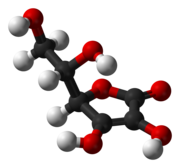
Chemical structure of vitamin C
Vitamin C megadosage is the consumption of vitamin C (ascorbate) in doses well beyond the current Dietary Reference Intake. This dose is similar to the consumption of ascorbate in other primates which, unlike humans, can synthesize their own vitamin C.[1] Nearly all animals synthesize vitamin C internally and as such, their cellular vitamin C concentrations are considerably much higher than those achieved with the Reference Daily Intake set for humans.[2] Vitamin C is a recognized antioxidant, which has led to its endorsement by some researchers as a complementary therapy for improving quality of life.[3] Vitamin C has been promoted in alternative medicine as a treatment for the common cold, cancer, polio, and various other illnesses. The evidence for these claims is mixed, although vitamin C is generally regarded as a beneficial antioxidant. There is a strong advocacy movement for such doses of vitamin C, despite a prolonged lack of conclusive medical evidence or large scale, formal trials in the 10 to 200+ grams per day range. Advocates criticize mainstream scientific studies for using doses which are too low, and mainly using oral vitamin C when intravenous vitamin C is preferred.
Background
Vitamin C is needed in the diet to prevent scurvy; however, from the time it became available in pure form in the 1930s, some physicians have experimented with vitamin C as a treatment for diseases other than scurvy.[4] Orthomolecular-based megadose recommendations for vitamin C are based mainly on theoretical speculation and observational studies. The speculation arises from the fact that most animals synthesize vitamin C, and achieve much higher cellular concentrations than humans. Irwin Stone coined the term hypoascorbia to describe what he thought was a genetic defect in humans leading to a lower level of vitamin C than other primates. Observational studies began with work by McCormick and Klenner, who used intravenous vitamin C to treat a wide range of illnesses. The highest dose treatments, published clinical results of specific orthomolecular therapy regimes pioneered by Drs. Klenner (repeated IV treatments, 400–700+ (mg/kg)/day[5][6]) and Cathcart (oral use until the onset of diarrhea,[7] up to ~150 grams ascorbate per day for flu), have remained experimentally unaddressed by conventional medical authorities for decades.
A comprehensive systematic review of vitamin C and the cold found a minor effect (8% in adults, 14% in children) in preventing the cold, but not treating it, and a substantial effect (50%) in preventing the cold in extreme environments.[8] The minimum dose rate in the studies examined (0.2g) was much lower than the dose advocated by megavitamin proponents. Over 0.2 g dose a day Its effect on cancer has been controversial, beginning with a heavily criticized 1976 study which found significantly increased survival among cancer patients treated with intravenous and oral vitamin C.[9] Two subsequent studies using only oral ascorbate failed to replicate these findings,[10] and vitamin C's use as a cancer treatment was dismissed by mainstream medicine. Recently, it has been revived by several Canadian researchers, who have focused on intravenous vitamin C.[11] Their Phase I trial of intravenous vitamin C on cancer patients found no objective response to cancer, although no toxicity was discovered, either.[12] However, Phase I trials are designed to assess the safety of a possible treatment, not its efficacy.[13]
Advocates criticize mainstream scientific studies for using doses which are too low, and mainly using oral vitamin C when intravenous vitamin C is preferred.[citation needed]
Dosage
Oral megadose vitamin C as a prevention element is prescribed as part of a comprehensive individualized vitamin regimen. The typical individual's pharmacokinetics of oral solubilized vitamin C requires 5 or more administrations of immediately dissolvable vitamin C for 24 hour coverage as measured by blood levels. Effective time release formulations of vitamin C may allow 24 hour coverage with only 3 oral administrations. Typical daily orthomolecular doses of oral vitamin C for preventative purposes range 5 - 25 grams of ascorbate per day in healthy adults.[citation needed] Less than 2 grams per day is not considered a principled amount for orthomolecular "megadose" use in healthy people. Linus Pauling's retrospective analyses of several earlier vitamin C studies identified certain subgroups, which involved physical or cold stress, as statistically benefiting from even one gram per day against common respiratory illnesses, but this amount is not considered optimal or even a megadosed daily usage by advocates.[citation needed]
Oral megadose vitamin C as an oral treatment element for infections and toxic exposures, with a comprehensive individualized or naturopathic regimen, is considered to require both a higher frequency and much greater quantity for effectiveness. Typical oral treatment frequencies with vitamin C range 15 minutes to 2 hours, the more frequent dosing considered more effective and tighter, more easy to optimize, especially during the first few hours of administration. Less frequent administrations during illness, every hour or two, reflect convenience of administration. Time release oral formulations are used for longer periods between doses such as during sleep. Pauling's recommendation of 1-2 grams of ascorbate per hour at the first sign or tickle of a cold is considered a minimal principled effort by advocates. Cathcart's "bowel tolerance" regimen, front loaded for higher frequency and amounts during the first several hours, is considered by advocates the most effective and the maximum practical oral use of vitamin C.[citation needed]
The Vitamin C Foundation recommends an initial usage of up to 8 grams of vitamin C every 20–30 minutes[14] in order to show an effect on the symptoms of a cold infection that is in progress. Equally importantly, the plasma half life of high dose ascorbate is approximately 30 minutes, which implies that most high dose studies have been methodologically defective and would be expected to show a minimum benefit. Clinical studies of divided dose supplementation, predicted on pharmacological grounds to be effective, have only rarely been reported in the literature.
Neutralization
Dissolving ascorbic acid and sodium bicarbonate in water yields a solution of sodium ascorbate and carbonic acid, which releases carbon dioxide into the water. Essentially, what you get is a solution of sodium ascorbate in seltzer water. Sodium ascorbate has been administered intravenously in doses around 50 grams, without adverse affects. Being a neutral salt, it does not upset the pH of the blood. This is not the case if you were to ingest several grams of sodium bicarbonate without ascorbic acid, which could raise the pH of the blood, potentially causing alkalosis. So, it is important not to ingest more sodium bicarbonate than necessary to neutralize the acidity of the ascorbic acid you are taking. It takes one mole of sodium bicarbonate, NaHCO3, to neutralize one mole of ascorbic acid, C6H8O6:
NaHCO3 + C6H8O6 --> NaC6H7O6 + H2CO3
One mole of sodium bicarbonate is 84 grams, and one mole of ascorbic acid is 176 grams. So, the correct (stoichiometric) ratio of sodium bicarbonate to ascorbic acid is 84/176 = 0.477. For example, it would take 477 milligrams of sodium bicarbonate to neutralize 1000 milligrams of ascorbic acid.
Conditions
Common cold
The results of three meta-analyses show that vitamin C in doses ranging from 200 mg to 2 grams per day reduce duration, but not incidence, of the common cold by 8% for adults and 14% for children. Incidence appears to be reduced by 50% in stressed adults such as soldiers or athletes in extreme, cold environments. The clinical significance of these effects is uncertain, but the biological effect appears genuine.[8][15]
One researcher suggested in a 1996 article that "three of the most influential reviews" drawing the conclusion that vitamin C has no proven effects on the cold contained "serious inaccuracies and shortcomings, making them unreliable sources on the topic."[16]
Heart disease
Vitamin C is the main component of the three ingredients in Linus Pauling's patented but unvalidated preventive cure for lipoprotein(a), which [17] related heart disease, the other two being the amino acid lysine and niacin (a form of Vitamin B3). Lp(a) as an atherosclerotic, evolutionary substitute for ascorbate[18] is still discussed as a hypothesis by mainstream medical science[19] and the Rath-Pauling related protocols[20] have not been rigorously tested, nor have they been evaluated by the FDA (because no one has submitted a drug approval application).[citation needed]
Cancer
In 1976 Linus Pauling and Ewan Cameron published a trial of 100 patients treated with intravenous vitamin C for which showed significantly increased lifespans.[9] Two large, placebo-controlled trials of only oral vitamin C in 1979 and 1985[21][22] did not find a positive effect of vitamin C in cancer patients. A recent in vitro study found that low levels of vitamin C inhibited tumor growth, but high levels increased tumor growth.[23]
In 2005 in vitro (test tube) research funded by the National Institutes of Health indicated that vitamin C administered in pharmacological concentrations (i.e. intravenous) was preferentially toxic to several strains of cancer cells. The authors noted: "These findings give plausibility to intravenous ascorbic acid in cancer treatment, and have unexpected implications for treatment of infections where H2O2 may be beneficial."[11] In 2006 the Canadian Medical Association Journal published a case study of three individuals that demonstrated that intravenous vitamin C might subdue advanced-stage cancer, though the authors concede that spontaneous remissions have been known to occur.[24]
In 2007, a Phase I trial of intravenous vitamin C on cancer patients was announced. The recently published trial of intravenous vitamin C on cancer patients found no objective response to cancer, although no toxicity was discovered, either.[12] The primary purpose of this study was to evaluate the safety and tolerability of vitamin C (ascorbic acid) given by injection into the vein. (A Phase I trial assesses only the safety and tolerability of a treatment, not its efficacy.)
In September 2007 a study funded by the NIH at Johns Hopkins University found that Vitamin C prevents the growth of cancer cells in an animal model, supposedly by the elimination of the HIF-1 (hypoxia-induced factor) protein, which is necessary for cancer growth in oxygen starved environments.[25] The authors, however, noted that this study was very preliminary and people "should not rush out and buy bulk supplies of antioxidants as a means of cancer prevention."
A pilot study of intravenous vitamin C on cancer patients was conducted in 2005. Based upon their findings, the researchers suggested that "intravenous vitamin C therapy for cancer is relatively safe, provided the patient does not have a history of kidney stone formation."[26]
In 2008 researchers at the National Institute of Diabetes and Digestive and Kidney Diseases in Bethesda, Maryland, gave vitamin C intravenously to mice with human derived cancers and found that it slowed tumor growth by up to 53%. By injecting into the bloodstream it is possible to get much larger amounts of the vitamin to a tumor than is possible with oral supplements. The Cancer Treatment Centers of America (CTCA) in Zion, Illinois, is currently (2008) testing the safety of intravenous vitamin C in late-stage cancer patients for whom there is no other treatment option.[27]
Vitamin C supplementation may interfere with effective cancer chemotherapy. A 2008 study from Memorial Sloan-Kettering Cancer Center found that vitamin C was taken up by cancer cells and protected the cells from chemotherapy drugs, raising the possibility that vitamin C might impair the effectiveness of chemotherapy.[28][29]
Treatment of phencyclidine psychosis
Large dosages of vitamin C can be used in the acute treatment of phencyclidine (PCP) psychosis, It operates as a secondary rather than primary treatment. Usually, 1000-2000 mg. of vitamin C are given intravenously over the course of 5–10 minutes. It is given in combination with a DA-2 antagonist such as haloperidol or risperidone. The antagonist is given intramuscularly and not combined with vitamin C. The vitamin acts synergistically with phencyclidine or its metabolites.[30]
Gout
In 2008 researchers established that higher vitamin C intake reduces serum uric acid levels, and is associated with lower incidence of gout. The effect is more pronounced as intake increases into the megavitamin range.[31]
Diabetes
In 2009 a study found that intravenous megadosage of vitamin C, given in conjunction with insulin can repair the damage to blood vessels caused by diabetes.[32][33]
Lifespan
A 10-year study from UCLA showed that in a population of more than 11,000 US adults aged 25–74, men who took 800 mg of vitamin C daily lived about six years longer than men who took only 60 mg of vitamin C daily.[34] Nevertheless, this study has been challenged on the basis that the age structure of the group taking vitamin C was different from that of the men who did not, thus creating a misleading result.[35] The authors of this second, seemingly contradictory, study, taking into account details such as overall food consumption, found no evidence of such a protective effect.
Possible adverse effects
While being harmless in most typical quantities, as with all substances to which the human body is exposed, vitamin C can still cause harm under certain conditions. In the medical community, these are known as contraindications.
- A genetic condition that results in inadequate levels of the enzyme glucose-6-phosphate dehydrogenase (G6PD), can cause sufferers to develop hemolytic anemia after ingesting specific oxidizing substances (favism), such as very large dosages of vitamin C. There are common, inexpensive tests for G6PD deficiency.
- There is a longstanding belief among the mainstream medical community that vitamin C causes kidney stones, which seems based little on science.[36] Although some individual recent studies have found a relationship[37] there is no clear relationship between excess ascorbic acid intake and kidney stone formation.[38]
Side-effects
Although vitamin C can be well tolerated at doses well above the RDA recommendations, megadosing may cause side effects such as stomach upset and laxative effects such as diarrhea. The dose at which these effects may occur varies with the individual and health condition.
- High quantities of any acid will raise the acidity of the stomach and potentially cause heartburn, but the pH of the acid can be simply neutralized with baking soda if mixed in ratio 1,000 mg L-ascorbic acid / 477 mg baking soda. Too much of baking soda makes the solution salty, too little will leave the solution tasting sour, just right will make it neutral with no taste. This process has no effect on vitamin C content, only on the pH of the solution and taste.
- Relatively large doses of vitamin C may cause indigestion, particularly when taken on an empty stomach. This generally occurs at doses larger than 10,000 mg / day, but may occur at much higher doses if the patient is ill.[39]
- When taken in large doses, vitamin C causes diarrhea. The minimum dose that brings about this laxation effect varies on the individual. The amount of vitamin C that is just short of the dose which produces diarrhea has been called the "bowel tolerance" dose. It is said to range from 4 to 15 grams per day in healthy individuals, and up to 200 grams per day or more illness. Robert Cathcart M.D. reported that the sicker a patient is, the more ascorbic acid he can tolerate by mouth before diarrhea is produced.[40]
- It has been suggested that large doses of acidic vitamin C solution (ascorbic acid) swished around the mouth, rather than swallowed directly without a neutral rinse, may erode dentition.[41]
- A 31-year-old Australian woman who had received a kidney transplant died soon afterward as a result of calcium oxalate deposits that destroyed her new kidney function. Doctors concluded that high-dose vitamin C therapy should be avoided in patients with kidney failure.[42] However, oxalate-induced kidney failure has been reported in people with no apparent kidney problem.[citation needed]
- It has been speculated that high dosage vitamin C ingestion may cause early onset of puberty in females. The source of the vitamin is said to be independent of the effect.[43][verification needed]
Chance of overdose
As discussed previously, vitamin C generally exhibits low toxicity. The LD50 (the dose that will kill 50% of a population) is generally accepted to be 11900 milligrams per kilogram in rat populations.[44] Vitamin C proponent Dr. Robert Cathcart M.D. reports that he has used intravenous doses of 60 grams, with simultaneous oral doses of unspecified amount, with no adverse effects.[7]
Conflicts with prescription drugs
Pharmaceuticals designed to reduce stomach acid, such as the proton pump inhibitors (PPIs), are among the most widely-sold drugs in the world. One PPI, omeprazole (Prilosec), has been found to lower the bioavailability of vitamin C by 12%, independent of dietary intake. The probable mechanism of vitamin C reduction, intragastric pH elevated into alkalinity, would to all other PPI drugs, though not necessarily to doses of PPIs low enough to keep the stomach slightly acidic.[45]
Potential harmful effects
- Some test-tube experiments have interpreted that Vitamin C may have possible adverse effects on decomposition of lipid peroxides[46] in nonviable in vivo quantities and conditions[47] and inhibit caspase-8 dependent apoptosis.[48] In April 1998 the journal Nature reported pro-oxidant effects of excessive doses of vitamin C / ascorbic acid.[49] The effects were noted in test tube experiments and on only two of the 20 markers of free radical damage to DNA. They have not been supported by further evidence from living organisms.[47]
- A speculated increased risk of kidney stones may be a side effect of taking vitamin C in larger than normal amounts (more than 1 gram). The potential mechanism of action is through the metabolism of vitamin C to dehydroascorbic acid, which is then metabolized to oxalic acid,[50] a known constituent of kidney stones. However, this oxalate issue is still controversial, with evidence being presented for[51] and against[52] the possibility of this side effect.
- "Rebound scurvy" is a theoretical, never observed, condition that could occur when daily intake of vitamin C is rapidly reduced from a very large amount to a relatively low amount. Advocates suggest this is an exaggeration of the rebound effect which occurs because ascorbate-dependent enzyme reactions continue for 24–48 hours after intake is lowered, and use up vitamin C which is not being replenished.
- Some writers[53] have identified a risk of poor copper absorption from high doses of vitamin C. Ceruloplasmin levels seem specifically lowered by high vitamin C intake. In one study, 600 milligrams of vitamin C daily led to lower ceruloplasmin levels similar to those caused by copper deficiency.[54] In another, ceruloplasmin levels were significantly reduced.[55]
- Some alternative medicine proponents suggest that doses of around 6-10 grams per day of vitamin C can induce an abortion in women under 4 weeks of pregnancy.[56] This is based on evidence that high-dose vitamin C increases estrogen levels that may contribute to abortion in early-stage pregnancy, and that these properties have been demonstrated in laboratory animals.[57] This theory however is in direct opposition to Dr. Klenner's claim that there were no miscarries in over 300 consecutive pregnant patients who received 3g to 6g per day of Vitamin C,[58] whereby Dr. Klenner concluded that failure to use this agent in sufficient amounts in pregnancy borders on malpractice.
Genetic deficiency and broad spectrum hypotheses
Since its discovery vitamin C has been considered almost a universal panacea[citation needed] by some, although this led to suspicions of it being overhyped by others.[59]
Humans and higher primates, as well as guinea pigs and small number of other animal species, carry a mutated and ineffective form of the enzyme L-gulonolactone oxidase, the fourth and last step in the ascorbate-producing machinery. This mutation likely occurred 40 to 25 million years ago (in the anthropoids lineage). The three surviving enzymes continue to produce the precursors to vitamin C but the process is incomplete and the body then disassembles them.
It is agreed by most researchers, proponents and critics altogether, that the amounts of vitamin C consumed by our common anthropoid ancestor in its normal habitat (African rainforests) was amply sufficient to prevent death from scurvy and did not limit its ability to reproduce: i.e., it was an evolutionarily feasible change. Bourne[60] (quoted in Stone[61]), Pauling[1] and, recently, Milton,[62] showed that these amounts were likely 10 to 20 times higher than what modern humans consume when eating cultivated species, as opposed to the less palatable vitamin-C-rich plant species growing in rainforests.

Linus Pauling's popular and influential book How to Live Longer and Feel Better, first published in 1986, advocated very high doses of vitamin C.
In the 1960s, the Nobel-Prize-winning chemist Linus Pauling, after contact with Irwin Stone, began actively promoting vitamin C as a means to greatly improve human health and resistance to disease. His book How to Live Longer and Feel Better was a bestseller and advocated taking more than 10,000 milligrams per day orally, thus approaching the amounts released by the liver directly into the circulation in other mammals: an adult goat, a typical example of a vitamin-C-producing animal, will manufacture more than 13,000 mg of vitamin C per day in normal health and as much as 100,000 mg daily when faced with life-threatening disease, trauma, or stress.[63] Pauling's book sold widely and many advocates today see its influence as the reason there was a marked downward trend in US heart disease from the early 1980s onwards.[citation needed]
Stone's work also informed the practise of Dr. Robert Cathcart, in the 1970s and 1980s. Cathcart developed the concept of bowel tolerance, the use until the onset of diarrhea, followed by tapering of dose. He found that, unlike healthy people, seriously ill persons could tolerate levels of hundreds of grams per day before their bowel tolerance limit is reached.
Matthias Rath is a controversial German physician who once worked with Pauling and published in the National Academy of Sciences.[64][65] He is an active proponent and publicist for high dose vitamin C. Pauling's and Rath's extended theory [66] states that deaths from scurvy in humans during the ice age, when vitamin C was scarce, selected for individuals who could repair arteries with a layer of cholesterol, provided by lipoprotein(a), a lipoprotein found in vitamin C-deficient species (higher primates and guinea pigs). Pauling and Rath theorised that, although eventually harmful, lipoprotein deposition on artery walls was beneficial to the Human species and a "surrogate for ascorbate" in that it kept individuals alive until access to vitamin C allowed arterial damage to be repaired. Atherosclerosis is thus a vitamin-C-deficiency disease.
Based on another study by Pauling and colleagues published in the National Academy of Sciences[67] and other studies,[68][69][70] Rath argued publicly that high doses of vitamin C can be effectively used against viral epidemics such as HIV,[71] SARS and bird flu.[72][73]
It has been suggested by some advocates that vitamin C is really a food group in its own right, like carbohydrates or protein, and should not be seen as a pharmaceutical or vitamin at all. {Irwin Stone: "The Healing Factor"}
Genetic rationales for high doses
Four gene products are necessary to manufacture vitamin C from glucose. The loss of activity of the gene for the last step, Pseudogene ΨGULO (GLO) the terminal enzyme responsible for manufacture of vitamin C, has occurred separately in the history of several species. The loss of this enzyme activity is responsible of inability of guinea pigs to synthesize vitamin C enzymatically, but this event happened independently of the loss in the haplorrhini suborder of primates, including humans. The remains of this non-functional gene with many mutations are, however, still present in the genome of the guinea pigs and in primates, including humans.[74][75] GLO activity has also been lost in all major families of bats, regardless of diet.[76] In addition, the function of GLO appears to have been lost several times, and possibly re-acquired, in several lines of passerine birds, where ability to make vitamin C varies from species to species.[77]
Loss of GLO activity in the primate order supposedly occurred about 63 million years ago, at about the time it split into the suborders haplorrhini (which lost the enzyme activity) and the more primitive strepsirrhini (which retained it). The haplorrhini ("simple nosed") primates, which cannot make vitamin C enzymatically, include the tarsiers and the simians (apes, monkeys and humans). The suborder strepsirrhini (bent or wet-nosed prosimians), which are still able to make vitamin C enzymatically, include lorises, galagos, pottos, and to some extent, lemurs.[78]
Stone[79] and Pauling[80] calculated, based on the diet of our primate cousins[81] (similar to what our common ancestors are likely to have consumed when the gene mutated), that the optimum daily requirement of vitamin C is around 2,300 milligrams for a human requiring 2,500 kcal a day.
The established RDA has been criticized by Pauling to be one that will prevent acute scurvy, and is not necessarily the dosage for optimal health.[82]
Regulation of vitamin C
Regulation
There are regulations in most countries which limit the claims on the treatment of disease that can be placed on food, drug, and nutrient product labels. Regulations include:
- Claims of therapeutic effect with respect to the treatment of any medical condition or disease are prohibited by the Food and Drug Administration (in the USA, and by the corresponding regulatory agencies in other countries) unless the substance has gone through a well established clinical trial with neutral oversight.
- In the United States, the following notice is mandatory on food, drug, and nutrient product labels which make health claims: These statements have not been evaluated by the Food and Drug Administration. This product is not intended to diagnose, treat, cure or prevent any disease.[83]
Advocacy arguments
Vitamin C advocates argue that there is a large body of scientific evidence that the vitamin has a wide range of health and therapeutic benefits but which they claim have been ignored. They claim the following factors affect the marketing and distribution of vitamin C, and the dissemination of information concerning the nutrient:[84]
- There is some evidence of the applications and efficacy of vitamin C, but governmental agency dose and frequency of intake recommendations have remained relatively fixed. This has led some researchers to challenge the recommendations. In 2003 Steve Hickey and Hilary Roberts of the Manchester Metropolitan University published a fundamental criticism of the approach taken to fix the nutritional requirement of vitamin C. They again argued in 2004 that the RDA which is based on blood plasma and white blood cell saturation data from the National Institutes of Health (NIH) was based on flawed data.[85] According to these authors, the doses required to achieve blood, tissue and body "saturation" are much larger than previously believed. They allege that the Institute of Medicine (IoM) and the NIH have failed to respond to an open letter from a number of scientists and medical researchers, notably Doctors Steve Hickey, Hilary Roberts, Ian Brighthope, Robert Cathcart, Abram Hoffer, Archie Kalokerinos, Tom Levy, Richard Passwater, Hugh Riordan, Andrew Saul and Patrick Holford, which called for revision of the RDI (Reference Daily Intake).
See also
November 18, 2009
Vitamin C
From Wikipedia, the free encyclopedia
(Redirected from Vitamin c) This article is about the nutrient. For the chemical compound, see ascorbic acid. Vitamin C or L-ascorbic acid is an essential nutrient for humans, in which it functions as a vitamin. Ascorbate (an ion of ascorbic acid) is required for a range of essential metabolic reactions in all animals and plants. It is made internally by almost all organisms; notable mammalian exceptions are most or all of the order chiroptera (bats), and the entire suborder Anthropoidea (Haplorrhini) (tarsiers, monkeys and apes). It is also needed by guinea pigs and some species of birds and fish. Deficiency in this vitamin causes the disease scurvy in humans.[1][2][3] It is also widely used as a food additive.[4]
The pharmacophore of vitamin C is the ascorbate ion. In living organisms, ascorbate is an anti-oxidant, since it protects the body against oxidative stress,[5] and is a cofactor in several vital enzymatic reactions.[6]
Scurvy has been known since ancient times. People in many parts of the world assumed it was caused by a lack of fresh plant foods. The British Navy started giving sailors lime juice to prevent scurvy in 1795.[7] Ascorbic acid was finally isolated in 1933 and synthesized in 1934. The uses and recommended daily intake of vitamin C are matters of on-going debate, with RDI ranging from 45 to 95 mg/day. Proponents of megadosage propose from 200 to upwards of 2000 mg/day. A recent meta-analysis of 68 reliable antioxidant supplementation experiments, involving a total of 232,606 individuals, concluded that consuming additional ascorbate from supplements may not be as beneficial as thought.[8]
[edit] Biological significance
Vitamin C is purely the L-enantiomer of ascorbate; the opposite D-enantiomer has no physiological significance. Both forms are mirror images of the same molecular structure. When L-ascorbate, which is a strong reducing agent, carries out its reducing function, it is converted to its oxidized form, L-dehydroascorbate.[6] L-dehydroascorbate can then be reduced back to the active L-ascorbate form in the body by enzymes and glutathione.[9] During this process semidehydroascorbic acid radical is formed. Ascorbate free radical reacts poorly with oxygen, and thus, will not create a superoxide. Instead two semidehydroascorbate radicals will react and form one ascorbate and one dehydroascorbate. With the help of glutathione, dehydroxyascorbate is converted back to ascorbate.[10] The presence of glutathione is crucial since it spares ascorbate and improves antioxidant capacity of blood.[11] Without it dehydroxyascorbate could not convert back to ascorbate.
L-ascorbate is a weak sugar acid structurally related to glucose which naturally occurs either attached to a hydrogen ion, forming ascorbic acid, or to a metal ion, forming a mineral ascorbate.
[edit] Biosynthesis
The vast majority of animals and plants are able to synthesize their own vitamin C, through a sequence of four enzyme-driven steps, which convert glucose to vitamin C.[6] The glucose needed to produce ascorbate in the liver (in mammals and perching birds) is extracted from glycogen; ascorbate synthesis is a glycogenolysis-dependent process.[12] In reptiles and birds the biosynthesis is carried out in the kidneys.
Among the animals that have lost the ability to synthesise vitamin C are simians (specifically the suborder haplorrhini, which includes humans), guinea pigs, a number of species of passerine birds (but not all of them—there is some suggestion that the ability was lost separately a number of times in birds), and many (probably all) major families of bats, including major insect and fruit-eating bat families. These animals all lack the L-gulonolactone oxidase (GULO) enzyme, which is required in the last step of vitamin C synthesis, because they have a defective form of the gene for the enzyme (Pseudogene ΨGULO).[13] Some of these species (including humans) are able to make do with the lower levels available from their diets by recycling oxidised vitamin C.[14]
Most simians consume the vitamin in amounts 10 to 20 times higher than that recommended by governments for humans.[15] This discrepancy constitutes much of the basis of the controversy on current recommended dietary allowances. It is countered by arguments that humans are very good at conserving dietary vitamin C, and are able to maintain blood levels of vitamin C comparable with other simians, on a far smaller dietary intake.
An adult goat, a typical example of a vitamin C-producing animal, will manufacture more than 13 g of vitamin C per day in normal health and the biosynthesis will increase "many fold under stress".[16] Trauma or injury has also been demonstrated to use up large quantities of vitamin C in humans.[17] Some microorganisms such as the yeast Saccharomyces cerevisiae have been shown to be able to synthesize vitamin C from simple sugars.[18][19]
[edit] Vitamin C in evolution
Venturi and Venturi[20][21] suggested that the antioxidant action of ascorbic acid developed firstly in plant kingdom when, about 500 Mya, plants began to adapting themselves to mineral deficient fresh-waters of estuary of rivers. Some biologists suggested that many vertebrates had developed their metabolic adaptive strategies in estuary environment.[22] In this theory, some 400-300 million years ago when living plants and animals first began the move from the sea to rivers and land, environmental iodine deficiency was a challenge to the evolution of terrestrial life.[23] In plants, animals and fishes, the terrestrial diet became deficient in many essential marine micronutrients, including iodine, selenium, zinc, copper, manganese, iron, etc. Freshwater algae and terrestrial plants, in replacement of marine antioxidants, slowly optimized the production of other endogenous antioxidants such as ascorbic acid, polyphenols, carotenoids, flavonoids, tocopherols etc., some of which became essential “vitamins” in the diet of terrestrial animals (vitamins C, A, E, etc.).
Ascorbic acid or vitamin C is a common enzymatic cofactor in mammals used in the synthesis of collagen. Ascorbate is a powerful reducing agent capable of rapidly scavenging a number of reactive oxygen species (ROS). Freshwater teleost fishes also require dietary vitamin C in their diet or they will get scurvy (Hardie et al.,1991). The most widely recognized symptoms of vitamin C deficiency in fishes are scoliosis, lordosis and dark skin coloration. Terrestrial freshwaters salmonids also show impaired collagen formation, internal/fin haemorrhage, spinal curvature and increased mortality. If these fishes are housed in seawater with algae and phytoplankton, then vitamin supplementation seems to be less important, presumably because of the availability of other, more ancient, antioxidants in natural marine environment.[24]
Some scientists have suggested that the loss of human ability to make vitamin C may have caused a rapid simian evolution into modern man.[25][26][27] However, the loss of ability to make vitamin C in simians must have occurred much further back in evolutionary history than the emergence of humans or even apes, since it evidently occurred sometime after the split in the Haplorrhini (which cannot make vitamin C) and its sister clade which retained the ability, the Strepsirrhini ("wet-nosed" primates). These two branchs parted ways about 63 million years ago (Mya). Approximately 5 million years later (58 Mya), only a short time afterward from an evolutionary perspective, the infraorder Tarsiiformes, whose only remaining family is that of the tarsier (Tarsiidae), branched off from the other haplorrhines. Since tarsiers also cannot make vitamin C, this implies the mutation had already occurred, and thus must have occurred between these two marker points (63 to 58 Mya).
It has been noted that the loss of the ability to synthesize ascorbate strikingly parallels the evolutionary loss of the ability to break down uric acid. Uric acid and ascorbate are both strong reducing agents. This has led to the suggestion that in higher primates, uric acid has taken over some of the functions of ascorbate.[28] Ascorbic acid can be oxidized (broken down) in the human body by the enzyme L-ascorbate oxidase.
[edit] Absorption and transport
Ascorbic acid is absorbed in the body by both active transport and simple diffusion. Sodium Dependent Active Transport - Sodium-Ascorbate Co-Transporters (SVCTs) and Hexose transporters (GLUTs) are the two transporters required for absorption. SVCT1 and SVCT2 imported the reduced form of ascorbate across plasma membrane.[29] GLUT1 and GLUT3 are the two glucose transporters and only transfer dehydroascorbic acid form of Vitamin C.[30] Although dehydroascorbic acid is absorbed in higher rate than ascorbate, the amount of dehydroascorbic acid found in plasma and tissues under normal conditions is low, as cells rapidly reduce dehydroascorbic acid to ascorbate.[31][32] Thus, SVCTs appear to be the predominant system for vitamin C transport in the body.
SVCT2 is involved in vitamin C transport in almost every tissue,[29] the notable exception being red blood cells which lose SVCT proteins during maturation.[33] Knockout animals for SVCT2 die shortly after birth,[34] suggesting that SVCT2-mediated vitamin C transport is necessary for life.
With regular intake the absorption rate varies between 70 to 95%. However, the degree of absorption decreases as intake increases. At high intake (12g), human body can absorb ascorbic acid as low as 16%; while, at low intake (<20 mg) the absorption rate could reach up to 98%.[35]
Biological tissues that accumulate over 100 times the level in blood plasma of vitamin C are the adrenal glands, pituitary, thymus, corpus luteum, and retina.[36] Those with 10 to 50 times the concentration present in blood plasma include the brain, spleen, lung, testicle, lymph nodes, liver, thyroid, small intestinal mucosa, leukocytes, pancreas, kidney and salivary glands.
[edit] Deficiency
Scurvy is an avitaminosis resulting from lack of vitamin C, since without this vitamin, the synthesised collagen is too unstable to perform its function. Scurvy leads to the formation of liver spots on the skin, spongy gums, and bleeding from all mucous membranes. The spots are most abundant on the thighs and legs, and a person with the ailment looks pale, feels depressed, and is partially immobilized. In advanced scurvy there are open, suppurating wounds and loss of teeth and, eventually, death. The human body can store only a certain amount of vitamin C,[37] and so the body soon depletes itself if fresh supplies are not consumed.
It has been shown that smokers who have diets poor in vitamin C are at a higher risk of lung-borne diseases than those smokers who have higher concentrations of vitamin C in the blood.[38]
Nobel prize winner Linus Pauling and Dr. G. C. Willis have asserted that chronic long term low blood levels of vitamin C or Chronic Scurvy is a cause of atherosclerosis.
Western societies generally consume sufficient Vitamin C to prevent scurvy. In 2004 a Canadian Community health survey reported that Canadians of 19 years and above have intakes of vitamin C from food of, 133 mg/d for males and 120 mg/d for females,[39] which is higher than the RDA recommendation.
[edit] History of human understanding
The need to include fresh plant food or raw animal flesh in the diet to prevent disease was known from ancient times. Native peoples living in marginal areas incorporated this into their medicinal lore. For example, spruce needles were used in temperate zones in infusions, or the leaves from species of drought-resistant trees in desert areas. In 1536, the French explorer Jacques Cartier, exploring the St. Lawrence River, used the local natives' knowledge to save his men who were dying of scurvy. He boiled the needles of the arbor vitae tree to make a tea that was later shown to contain 50 mg of vitamin C per 100 grams.[40][41]
Throughout history, the benefit of plant food to survive long sea voyages has been occasionally recommended by authorities. John Woodall, the first appointed surgeon to the British East India Company, recommended the preventive and curative use of lemon juice in his book "The Surgeon's Mate", in 1617. The Dutch writer, Johann Bachstrom, in 1734, gave the firm opinion that "scurvy is solely owing to a total abstinence from fresh vegetable food, and greens; which is alone the primary cause of the disease."
While the earliest documented case of scurvy was described by Hippocrates around the year 400 BC, the first attempt to give scientific basis for the cause of this disease was by a ship's surgeon in the British Royal Navy, James Lind. Scurvy was common among those with poor access to fresh fruit and vegetables, such as remote, isolated sailors and soldiers. While at sea in May 1747, Lind provided some crew members with two oranges and one lemon per day, in addition to normal rations, while others continued on cider, vinegar, sulfuric acid or seawater, along with their normal rations. In the history of science this is considered to be the first occurrence of a controlled experiment comparing results on two populations of a factor applied to one group only with all other factors the same. The results conclusively showed that citrus fruits prevented the disease. Lind published his work in 1753 in his Treatise on the Scurvy.[42]

Citrus fruits were one of the first sources of vitamin C available to ship's surgeons.
Lind's work was slow to be noticed, partly because his Treatise was not publish until six years after his study, and also because he recommended a lemon juice extract known as "rob".[43] Fresh fruit was very expensive to keep on board, whereas boiling it down to juice allowed easy storage but destroyed the vitamin (especially if boiled in copper kettles).[44] Ship captains concluded wrongly that Lind's other suggestions were ineffective because those juices failed to prevent or cure scurvy.
It was 1795 before the British navy adopted lemons or lime as standard issue at sea. Limes were more popular as they could be found in British West Indian Colonies, unlike lemons which weren't found in British Dominions, and were therefore more expensive. This practice led to the American use of the nickname "limey" to refer to the British. Captain James Cook had previously demonstrated and proven the principle of the advantages of carrying "Sour krout" on board, by taking his crews to the Hawaiian Islands and beyond without losing any of his men to scurvy.[45] For this otherwise unheard of feat, the British Admiralty awarded him a medal.
The name "antiscorbutic" was used in the eighteenth and nineteenth centuries as general term for those foods known to prevent scurvy, even though there was no understanding of the reason for this. These foods included but were not limited to: lemons, limes, and oranges; sauerkraut, cabbage, malt, and portable soup.
In 1907, Axel Holst and Theodor Frølich, two Norwegian physicians studying beriberi contracted aboard ship's crews in the Norwegian Fishing Fleet, wanted a small test mammal to substitute for the pigeons they used. They fed guinea pigs their test diet, which had earlier produced beriberi in their pigeons, and were surprised when scurvy resulted instead. Until that time scurvy had not been observed in any organism apart from humans, and had been considered an exclusively human disease.
[edit] Discovery of ascorbic acid

Albert Szent-Györgyi, pictured here in 1948, was awarded the 1937 Nobel Prize in Medicine "for his discoveries in connection with the biological combustion processes, with special reference to vitamin C and the catalysis of fumaric acid". He also identified many components and reactions of the citric acid cycle independently from Hans Adolf Krebs.
In 1912, the Polish-American biochemist Casimir Funk, while researching deficiency diseases, developed the concept of vitamins to refer to the non-mineral micro-nutrients which are essential to health. The name is a blend of "vital", due to the vital role they play biochemically, and "amines" because Funk thought that all these materials were chemical amines. One of the "vitamines" was thought to be the anti-scorbutic factor, long thought to be a component of most fresh plant material.
In 1928 the Arctic anthropologist Vilhjalmur Stefansson attempted to prove his theory of how the Eskimos are able to avoid scurvy with almost no plant food in their diet, despite the disease striking European Arctic explorers living on similar high-meat diets. Stefansson theorised that the natives get their vitamin C from fresh meat that is minimally cooked. Starting in February 1928, for one year he and a colleague lived on an exclusively minimally-cooked meat diet while under medical supervision; they remained healthy. (Later studies done after vitamin C could be quantified in mostly-raw traditional food diets of the Yukon, Inuit, and Métís of the Northern Canada, showed that their daily intake of vitamin C averaged between 52 and 62 mg/day, an amount approximately the dietary reference intake (DRI), even at times of the year when little plant-based food were eaten.)[46]
From 1928 to 1933, the Hungarian research team of Joseph L Svirbely and Albert Szent-Györgyi and, independently, the American Charles Glen King, first isolated the anti-scorbutic factor, calling it "ascorbic acid" for its vitamin activity. Ascorbic acid turned out not to be an amine, nor even to contain any nitrogen. For their accomplishment, Szent-Györgyi was awarded the 1937 Nobel Prize in Medicine "for his discoveries in connection with the biological combustion processes, with special reference to vitamin C and the catalysis of fumaric acid".[47]
Between 1933 and 1934, the British chemists Sir Walter Norman Haworth and Sir Edmund Hirst and, independently, the Polish chemist Tadeus Reichstein, succeeded in synthesizing the vitamin, making it the first to be artificially produced. This made possible the cheap mass-production of what was by then known as vitamin C. Only Haworth was awarded the 1937 Nobel Prize in Chemistry for this work, but the "Reichstein process" retained Reichstein's name.
In 1933 Hoffmann–La Roche became the first pharmaceutical company to mass-produce synthetic vitamin C, under the brand name of Redoxon.
In 1957 the American J.J. Burns showed that the reason some mammals were susceptible to scurvy was the inability of their liver to produce the active enzyme L-gulonolactone oxidase, which is the last of the chain of four enzymes which synthesize vitamin C.[48][49] American biochemist Irwin Stone was the first to exploit vitamin C for its food preservative properties. He later developed the theory that humans possess a mutated form of the L-gulonolactone oxidase coding gene.
In 2008 researchers at the University of Montpellier discovered that in humans and other primates the red blood cells have evolved a mechanism to more efficiently utilize the vitamin C present in the body by recycling oxidized L-dehydroascorbic acid (DHA) back into ascorbic acid which can be reused by the body. The mechanism was not found to be present in mammals that synthesize their own vitamin C.[50]
[edit] Physiological function
In humans, vitamin C is essential to a healthy diet as well as being a highly effective antioxidant, acting to lessen oxidative stress; a substrate for ascorbate peroxidase;[3] and an enzyme cofactor for the biosynthesis of many important biochemicals. Vitamin C acts as an electron donor for important enzymes:[51]
[edit] Collagen, carnitine, and tyrosine synthesis, and microsomal metabolism
Ascorbic acid performs numerous physiological functions in human body. These functions include the synthesis of collagen, carnitine and neurotransmitters, the synthesis and catabolism of tyrosine and the metabolism of microsome.[52] Ascorbate acts as a reducing agent (i.e. electron donor, anti-oxidant) in the above-described syntheses, maintaining iron and copper atoms in their reduced states.
Vitamin C acts as an electron donor for eight different enzymes:[51]
Posted by Katherina Perez.
November 18, 2009
Sodium ascorbate
From Wikipedia, the free encyclopedia
Sodium ascorbate is a compound with formula C6H7NaO6. It is the sodium salt of ascorbic acid.
It has E number "E301".
Sodium Ascorbate is used in a number of throat medications because, when reacted with the Hydrochloric Acid that is present in saliva, it creates ascorbic acid, more commonly known as vitamin C.
C6H7NaO6(s) + HCl(aq) -> NaCl(aq) + C6H8O6(aq)
Posted by Katherina Perez.
November 18, 2009
The use of vegetable capsule is the safest way to encapsulate Sodium Ascorbate crystalline powder. It produces no unwanted chemical interaction with the Sodium Ascorbate. Gelatin encapsulation of Vitamin C results to the formation of toxic chemicals, which lessens the Ascorbates antioxidant property. Aside from these the use of vegetable capsules are also characterized by less moisture content, consequently degrading less the Ascobate crystalline powder.
Gelatin capsules have a higher moisture content in the range of 14%, which may possibly cause a rapid deterioration of the Ascorbate powder within. The capsule being made from cellulose is not prone to bacterial deterioration, therefore, needing no artificial preservatives.
Gelatin capsules are sourced from cows or pigs, and are therefore protein in nature. Being a protein makes it susceptible to bacterial actions and therefore requires preservatives to prevent this. Veggie capsule being naturally sourced from plants maintains the Ascorbate's alkalinity. The green coloring of the veggie capsule comes only from the natural color of plants.
Gelatin capsules are coated with artificial colorings, some of which have already been banned in developed countries because of their bad effects on the body. The vegetable capsule of Vital C is guaranteed as Non-GMO (Genetically Modified Organism).
Posted by Katherina Perez.
November 18, 2009
Posted by Katherina Perez.
|
|


